Unlock Long-Term Weight Loss: The Power of a High-Protein Diet Plan
Fiber Insufficiency: Protein-centric meals may displace fiber-rich foods, compromising gut health and satiety. Aim for at least 25g of fiber daily alongside higher protein intake.
Micronutrient Gaps: Over-reliance on processed protein sources may reduce vegetable and fruit consumption. Colorful produce should maintain prominence regardless of protein goals.
Hydration Challenges: Higher protein intake increases hydration requirements due to the kidneys’ filtration demands. Water intake should increase proportionally with protein consumption.
Digestive Adaptation Period: Suddenly increasing protein can cause temporary digestive discomfort. Gradual implementation allows beneficial gut bacteria to adjust to the new nutritional pattern.
- Addressing these potential issues preemptively ensures that higher protein consumption enhances rather than compromises overall health.
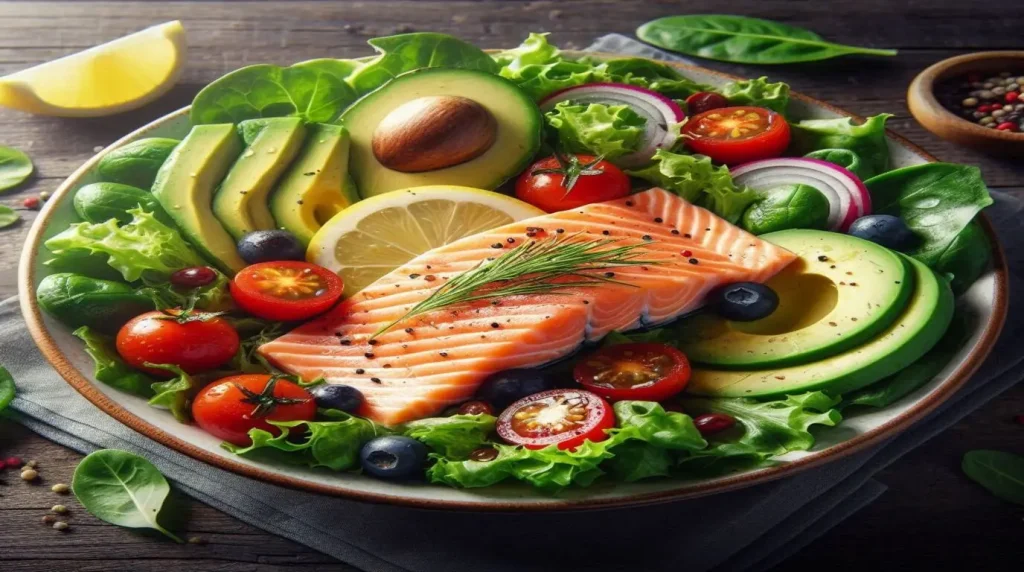
Recipe Example: Balanced Salmon Salad
- 4oz canned wild salmon
- 1/2 cup chickpeas
- 2 cups mixed greens
- 1/4 cup sliced red onion
- 1 tablespoon olive oil
- 1 tablespoon balsamic vinegar
- 1 tablespoon sunflower seeds
Combine ingredients for a meal delivering 25g of protein alongside substantial fiber, antioxidants, and omega-3 fatty acids.
Preparation:
- In a large bowl, combine the mixed greens, chickpeas, and red onion.
- Gently flake the salmon with a fork and add it on top of the salad mixture.
- Drizzle olive oil and balsamic vinegar evenly over the salad.
- Sprinkle sunflower seeds for added crunch and nutrients.
- Toss lightly to combine, or serve layered for presentation.